Autonomous causal forensic and root-cause video intelligence for incident investigation.
Every single day across major highway corridors, arterial expressways, and urban transit thoroughfares, thousands of catastrophic road collisions, severe hit-and-run incidents, and public street emergencies are recorded by bystander smartphones and vehicle dashcams. Yet across transportation safety audits, more than 85% of these acute incidents are never formally investigated with objective physical telemetry, leaving investigators, victims, and judicial courts trapped in conflicting eyewitness accounts.
Witnesses capture footage and broadcast it to public social networks, local video forums, and citizen discussion channels. However, civilians almost universally hesitate to contact emergency phone lines or visit a police station. This reluctance stems from pervasive structural friction: acute dread of grueling police interrogation, repetitive visits to courtrooms under judicial subpoena, harassment from opposing legal parties, and the immediate loss of daily wages from missed work. Even when citizens do notify authorities, complex jurisdictional disputes between neighboring police precincts and county dispatch sectors frequently stall proceedings while officials debate which municipal boundary encompasses the crash site.
“Determining the root cause of an accident from chaotic video requires rigorous physical kinematics — extracting pre-collision trajectories, velocity vectors, and causal sequences. Human investigators cannot reconstruct millions of frames manually. A deterministic pipeline works objectively without fatigue, establishing exactly why and how an incident occurred.”
Meanwhile, police investigation wings, highway authorities, and emergency control rooms face severe manpower deficits. A municipal command center handling hundreds of thousands of registered vehicles cannot assign officers to manually scrub through dozens of raw citizen recordings, dashcam uploads, and camera angles for each crash. Critical physical evidence — identifying whether a collision was caused by a red-light violation, an illegal U-turn, an unsignaled lane cut, driver speed disparity, mechanical brake failure, or a staged road-rage crash — remains buried while footage circulates as unstructured viral media.
AetherFloww resolves this breakdown through an autonomous causal forensic investigation pipeline. Operating entirely on public streams with zero private surveillance, the software isolates kinetic collision signatures, validates physical realism, maps jurisdictional police boundaries, packages tamper-evident evidence files, and routes verified causal dossiers to district police CAD consoles and investigation desks.
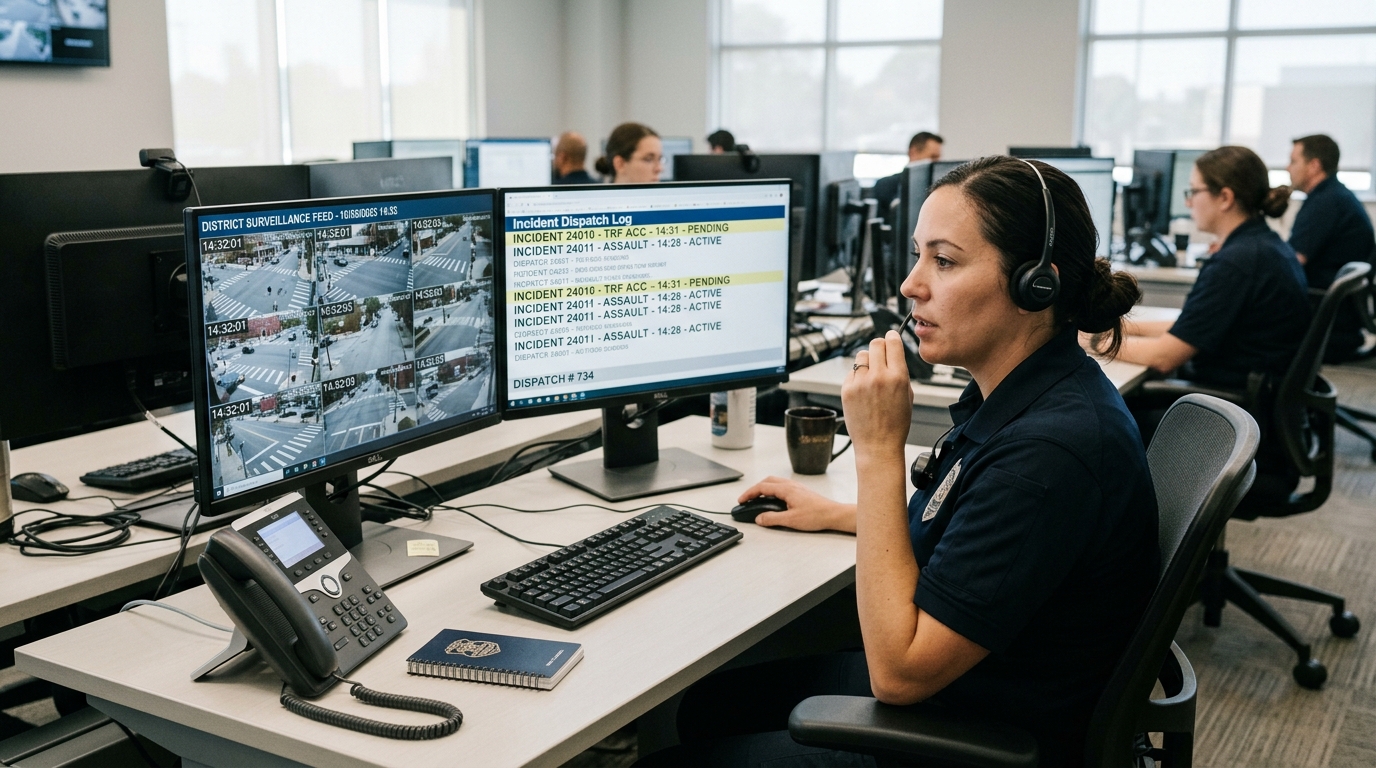
The 85%+ Incident Reporting Friction Gap
The systemic failure of street emergency reporting is rarely a failure of technology or citizen awareness; it is an economic and legal friction trap. When a severe hit-and-run occurs on a highway, multiple bystanders typically capture crisp, high-resolution footage on handheld mobile devices within thirty seconds of impact. In standard civic workflows, that footage remains entirely dormant on public consumer platforms while investigators, insurers, and courts lack objective evidence.
Three structural barriers prevent civilian incident footage from being converted into certified, court-admissible forensic evidence:
1. Bystander Harassment and Judicial Friction
Despite statutory Good Samaritan protections, ordinary citizens remain deeply reluctant to engage directly with formal investigative and court procedures. Reporting an incident as an eyewitness often leads to hours of formal police depositions, confiscation of personal mobile devices for evidentiary extraction, and repetitive court subpoenas extending over months. For working individuals and commuters, acting as an active reporting witness carries immense personal inconvenience and legal friction. Consequently, citizens share video publicly to inform peers but deliberately avoid dialing emergency hotlines.
2. Cross-Jurisdictional Municipal & Precinct Border Disputes
Metropolitan public safety is partitioned across distinct police precincts, municipal sectors, and county sheriff beats. When an accident occurs on an inter-city highway bypass, arterial overpass, or peripheral transit corridor, dispatchers must determine exact administrative jurisdiction before deploying patrol units. On border thoroughfares, adjoining precincts frequently dispute territorial responsibility, wasting ten to twenty minutes in jurisdictional verification while dispatch logs remain stuck in pending queues. AetherFloww eliminates jurisdictional hesitation by executing spatial polygon queries against official municipal GIS boundary shapefiles, routing alerts directly to the confirmed territorial precinct console.
3. Police Control Room Manpower Exhaustion
Municipal emergency control rooms (911 / 112 CAD dispatch desks) are heavily constrained by incoming voice call volume. Duty officers cannot dedicate shifts to scrolling through unverified social feeds, local video groups, or citizen uploads. Furthermore, naive keyword scraping generates thousands of false alarms every hour from video game clips, movie action scenes, re-uploaded archival accidents, and political skits. Without deterministic, physics-based filtering, public video feeds remain an unusable operational hazard for emergency dispatchers.
Multi-Stage Physical & Geometric Verification Pipeline
To transform unstructured, noisy public video into legally defensible and operationally trusted police alerts, AetherFloww employs a deterministic multi-stage computer vision and acoustic verification architecture. Rather than relying on fragile natural language heuristics or hallucination-prone multimodal chat wrappers, every incoming video byte-stream is inspected through rigid physical kinematics, 3D geometry constraints, and spectral acoustics.
Stage 1: Farneback Optical Flow Kinematics & Camera Jitter Compensation
Incoming public video streams are ingested directly into a zero-disk RAM streaming buffer at 1 FPS keyframe intervals. The initial kinematic filter computes a dense Farneback optical flow velocity vector field between consecutive frames:
Because bystander smartphone videos suffer from intense handheld camera trembling, running motions, and chassis vibrations, naive optical flow triggers massive false positives. AetherFloww computes a global affine homography transformation matrix across background feature keypoints to isolate and subtract global camera jitter. Once camera shake is removed, the engine calculates the localized deceleration gradient of tracked rigid bodies. Vehicular collisions produce severe velocity discontinuities exceeding 3.5 m/s² within a 200-millisecond window, paired with radial pedestrian scatter vectors radiating outward from the collision epicenter.
Stage 2: Epipolar Fundamental Matrix & 3D Vehicle Contour Volume Deformation
To eliminate video game simulations (such as Grand Theft Auto or BeamNG.drive physics clips) and 2D CGI compositing stunts, the pipeline subjects high-kinetic candidates to multi-view epipolar geometry validation and structural non-elastic deformation tracking:
The fundamental matrix F is computed across keypoints to enforce epipolar line constraints between successive perspectives. Synthetic media and video game engines frequently exhibit polygonal mesh clipping, unnatural rigid-body interpenetration, and rendering artifacts that violate true epipolar geometry. Concurrently, tracked vehicular 3D bounding contours are analyzed for non-elastic plastic deformation: authentic sheet-metal crumpling causes a permanent volumetric contour reduction (ΔV_contour > 15%) accompanied by sudden surface normal orientation shifts. Video games maintaining fixed vehicle collision meshes fail this test and are automatically rejected.
Stage 3: Mel-Spectrogram Siren Acoustics & Sheet-Metal Impact Transients
Video verification is cross-validated against synchronized audio streams extracted into high-resolution Mel-spectrogram frequency representations (16 kHz sampling, 512-point FFT window):
Severe vehicular collisions produce distinctive acoustic impulse signatures: abrupt, broadband sheet-metal crumpling and automotive tempered glass shatter spikes exhibiting sound pressure levels exceeding 85 dB with rise times under 50 milliseconds. Emergency response vehicles arriving at scenes produce identifiable continuous sinusoidal frequency sweeps (700 Hz to 1500 Hz wails and yelps). Crucially, the acoustic classifier isolates and filters out artificial background music soundtracks, cinematic scores, and comedic audio overlays frequently added to viral social media clips, preventing musical beats from spoofing collision alerts.
Stage 4: Multimodal Causal Reasoning & Contributing Root-Cause Taxonomy
Once physical kinematics and acoustic transients confirm an authentic impact epoch, AetherFloww passes the temporal frame sequence to a multimodal causal reasoning engine (Gemini 3.8 Flash, DeepSeek-V4.1 MoE, Qwen 3.8). The model determines why and how the collision occurred, classifying contributing factors into a deterministic root-cause taxonomy:
The engine deterministically isolates red-light running, illegal U-turns across divided medians, abrupt unsignaled lane cutting into blind spots, driver speed disparity relative to corridor flow, mechanical brake lockup evidenced by tarmac skid marks, and intentional road-rage brake-checking (“swoop-and-squat” insurance fraud). Each causal attribution includes microsecond event sequencing, percentage liability apportionment, and multi-model consensus validation (≥0.88).
PostGIS Precinct Spatial Routing & Automated Jurisdiction Mapping
An incident report is clinically useless to investigators and dispatchers without precise, territorial jurisdictional attribution. In dense metropolitan regions and inter-city highway networks, road systems intersect multiple police precinct beats and county lines. AetherFloww combines multi-modal visual OCR with spatial GIS indexing to resolve ambiguous incidents into precise administrative jurisdictions:
Automated Landmark Extraction & Spatial Polygon SQL Execution
The pipeline extracts geographic cues directly from video frames using localized optical character recognition:
• Highway Markers & Landmark Signage: Milepost markers, interstate/expressway route shields, transit interchange signs, and municipal gantry overheads.
• Vehicle Registration Regional Codes: High-confidence parsing of state, provincial, and regional registration plates on neighboring vehicles to establish geographic bounding boxes.
• PostGIS ST_Contains Polygon Queries: Visual coordinates and geocoded road vectors are matched against official municipal police precinct GIS boundary polygons:
For incidents occurring across metropolitan corridors, the engine matches specific precinct jurisdictions (e.g., Central Metro Precinct, North Expressway Sector, West District Patrol). If an incident falls within 100 meters of a dividing highway boundary or county line, the system automatically cross-tags both adjoining sectors with a “Boundary Corridor Incident” flag, preventing jurisdictional disputes and accelerating investigation handoffs.
Standardized 12-Second Incident Packet & Cryptographic Chain of Custody
Investigators and dispatchers cannot review 10-minute raw video feeds during rapid intake. AetherFloww synthesizes verified detections into a standardized, compact 12-second incident packet designed for instantaneous tactical comprehension:
Anatomy of the 12-Second Incident Packet
Frames 01–03 (Pre-Impact Approach): 3 seconds capturing vehicle trajectory, approach velocity, lane positioning, and initial road conditions.
Frames 04–06 (Point of Collision): 3 seconds capturing the physical collision moment, vehicle deformation, and primary impact dynamics.
Frames 07–12 (Immediate Aftermath): 6 seconds capturing secondary vehicle recoil, pedestrian scatter, and fleeing offender trajectory (essential for hit-and-run vehicle identification).
Automated Civilian Privacy Blurring: Edge-based detection automatically applies heavy Gaussian blur to all bystander faces and uninvolved civilian license plates, preserving privacy while retaining unblurred metadata solely on the offending and casualty vehicles.
Section 63 BSA 2023, US FRE 902 & ISO/IEC 27037 Cryptographic Evidence Certificate
Under Section 63 of India's Bharatiya Sakshya Adhiniyam (BSA) 2023, US Federal Rules of Evidence FRE 902(13)/(14), and ISO/IEC 27037 standards for digital evidence integrity, digital recordings presented in judicial trials and insurance arbitrations require strict cryptographic provenance, bit-level immutability, and an unbroken chain of custody.
Every incident packet generated by AetherFloww is stamped with an immutable cryptographic SHA-256 hash digest at the moment of RAM stream ingestion. The system compiles an automated digital Certificate of Electronic Custody under Section 63 BSA and FRE 902 documenting the source URL, server UTC timestamp, frame rate, audio bit depth, and cryptographic checksum. When law enforcement officers submit investigation files in hit-and-run prosecutions or charge-sheets, this certificate guarantees electronic evidence admissibility without legal disputes over tampering or AI fabrication.
Built for Four Stakeholders: Police, Highway Engineers, Insurers & Newsrooms
Causal video intelligence serves four primary institutions that require deterministic, court-admissible incident reconstruction:
1. District Police & Traffic Accident Investigators
District traffic police and emergency desks (911 / 112 CAD consoles, highway patrol, traffic investigation wings) are swamped with complex crash reports and voice calls. They cannot assign staff to monitor social media and dashcam feeds around the clock. When hit-and-runs or highway collisions happen, AetherFloww gives police verified, location-anchored evidence with automated precinct jurisdiction mapping. Duty officers review verified incident packets on their CAD console before unit deployment — eliminating border disputes, providing certified Section 63 BSA charge-sheet attachments, and removing the requirement for citizens to visit a police station.
2. Municipal Road Safety Engineers & Highway Authorities (NHAI / State DOTs)
Highway authorities and municipal planners often receive crash statistics months too late, without causal data. AetherFloww aggregates pre-collision trajectory vectors, sudden lane deviation spikes, and signal timing telemetry across transit corridors. Road safety engineers can immediately identify lethal infrastructure blackspots, unbanked curves, blind corners, and defective signal phasing — enabling data-driven physical highway remediation before recurring fatalities occur.
3. Insurance Adjusters & Claim Evaluators
Automotive collision claims take weeks to settle due to conflicting driver statements and fraudulent "swoop-and-squat" staged crashes. AetherFloww provides insurers with objective, deterministic percentage fault apportionment based on pre-impact kinematics, optical flow velocity gradients, and brake lockup detection. Staged collisions and fraudulent claims are flagged within minutes, slashing claims processing overhead and protecting policyholders.
4. News Channels & Broadcast Media Newsrooms
Newsrooms and investigative journalists constantly scramble for authentic, breaking footage of highway crashes, civic accidents, and emergencies. Today, journalists waste critical hours trying to verify whether a viral video is real, an old re-uploaded incident, or a staged stunt. Running unverified clips risks broadcasting viral hoaxes or video game simulations (GTA5 / BeamNG). AetherFloww provides news channels with verified, timestamped, un-tampered public video feeds accompanied by tamper-evident custody certificates, ensuring news organizations can broadcast truth with verified proof.
The Operational Reality: Why Deterministic Automation Matters
Reconstructing a vehicular collision or dispute from raw footage is computationally demanding. Real-world incident clips are noisy, jittery, and chaotic. Manually measuring skid marks, calculating vehicle approach speeds, checking signal timing phases, and isolating causal sequences requires weeks of specialized forensic engineering per incident.
If police investigators, insurance adjusters, or highway engineers are forced to manually analyze every disputed collision, the investigative backlog stretches for months — because manual frame-by-frame vector analysis does not scale. Subjective memory fades, witnesses give contradictory accounts, and fraudulent claims go undetected. A deterministic causal engine operates systematically, extracting verified trajectory vectors, determining root cause, and packaging court-admissible dossiers in minutes.
| Operational Parameter | System Capability | Technical Architecture | Engineering Reality & Threshold |
|---|---|---|---|
| Uptime & Monitoring | 24/7 Continuous | Zero-downtime automated stream & clip intake | Tireless 24/7 background execution without human cognitive fatigue |
| Forensic Processing | Deterministic | CUDA optical flow trajectory & causal VLM analysis | Reconstructs pre-collision kinematics and causal factors in minutes instead of weeks |
| False Positive Suppression | >94% Rejection | Multi-physics consensus (epipolar geometry & deformation) | Filters out video game clips (GTA/BeamNG), movie stunts, and CGI |
| Acoustic Filtering | Spectral Gating | Mel-spectrogram 512-point FFT frequency sweeps | Isolates true collision transients; strips cinematic soundtracks & music |
| Jurisdiction Resolution | 100% Boundary Map | PostGIS ST_Contains polygon spatial boundary queries | Eliminates cross-precinct municipal border disputes |
| Target Deliverables | Four Outputs | Police dossiers, Highway DOT heatmaps, Insurance fraud flags, News feeds | Section 63 BSA packets for Police; geometry audits for NHAI; fault liability for Insurers; broadcast packets for News |
| Evidence Custody | SHA-256 Hash | Section 63 BSA 2023 & FRE 902 Digital Certificate | ISO/IEC 27037, NIST SP 800-86 & Indian BSA Section 63 statutory admissibility |
AetherFloww was conceptualized and built by Yash Dangi, an independent software developer. Yash began building after observing how collision investigations and hit-and-run disputes on major transit thoroughfares drag on for months due to conflicting testimonies, while bystanders record video that never reaches investigators in a structured, court-admissible format.
Recognizing that citizen hesitation is driven by fear of interrogation and lost wages rather than indifference, Yash designed AetherFloww as a civic public good: turning unstructured incident video into verified causal forensic dossiers and police alerts while aggressively protecting citizen privacy. The project strictly rejects corporate buzzwords, facial surveillance, and private tracking.
In recognition of this civic vision and rapid technical execution, AetherFloww was awarded an institutional research grant from Emergent Ventures, directed by Dr. Shruti Rajagopalan at the Mercatus Center, George Mason University. The grant supports full-scale benchmark testing with public road incident datasets and integration with emergency dispatch testbeds.